
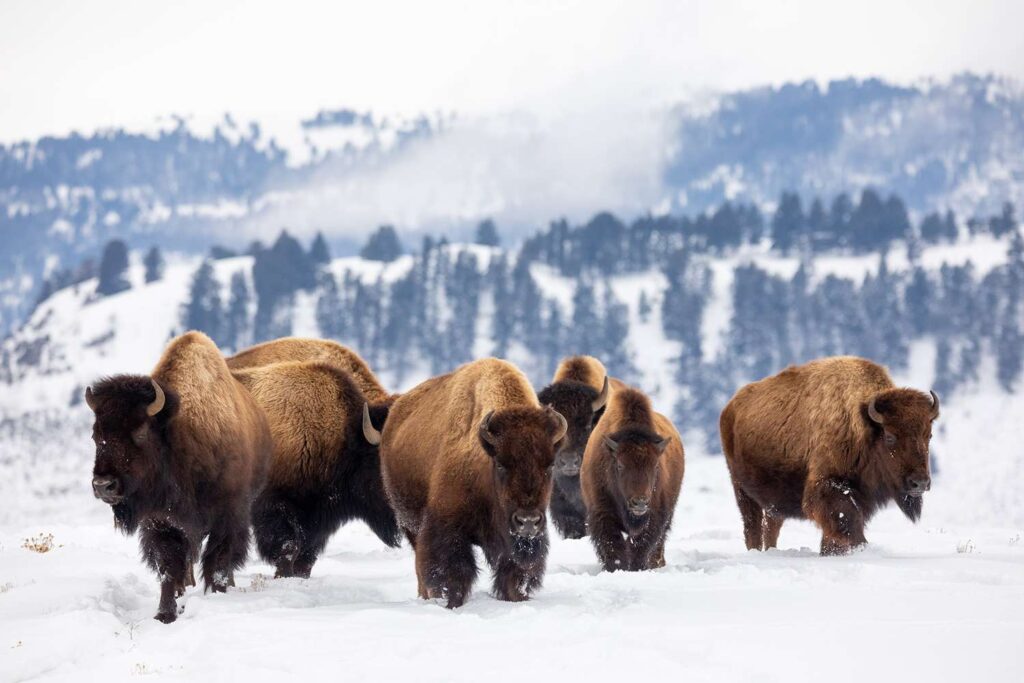
Winter strips Yellowstone to the essentials: snow, steam, and tracks that read like a story. With most park roads closed to regular vehicles, guided snowcoach tours in Yellowstone National Park are the safe and efficient way to reach the interior. If your goal is to spot Yellowstone winter wildlife, such as wolves at first light, bison trailing steam in the cold, or foxes mousing in perfect arcs, this guide lays out what works in the field. It’s grounded in how our biologists and naturalists operate daily: observe, move responsibly, and let the ecosystem lead the day.
Why Winter Is Prime Time for Wildlife Viewing
Visibility Improves
Snow creates natural contrast. Wolves, coyotes, foxes, elk, and bison stand out against open meadows, river corridors, and thermal basins.
Tracks Tell You Where To Look
A fresh sign narrows the search and teaches behavior, travel routes, hunting attempts, and resting spots.
Animal Movement Concentrates
Deep snow makes travel costly. Ungulates use packed paths and wind-swept ridges; predators follow. Thermally influenced valleys and river corridors become reliable winter wildlife “highways.”
Field Note
Our teams focus on light, wind, and snow surface. A bluebird morning isn’t always “best.” Diffuse light can reduce glare and extend viewing time without harsh shimmer off the snow.
Access 101: How Snowcoaches Open the Park
From mid-December to early March (weather permitting), most interior roads are designated for oversnow travel only. That’s where Yellowstone snowcoach tours matter. Snowcoaches give you:
Reach
Old Faithful, Hayden Valley, and other interior spots that regular cars can’t access in winter.
Stability and Safety
Professional drivers trained for variable traction, cold temps, and wildlife etiquette.
Observation Time
High, expansive windows; frequent stops for spotting and photography; radio coordination with other guides.
Common winter routes by snowcoach (conditions vary):
Madison Firehole–Old Faithful Corridor
Thermal features, bison, swans, river otters, occasional fox and coyote.
Canyon Hayden Valley
Classic winter wildlife landscape with broad sightlines for wolf spotting in winter and large bison herds.
Lewis River Corridor (From The South)
Scenic travel with good mixed-habitat sightings and big landscape photography.
Important
The Mammoth–Lamar–Cooke City road typically remains plowed and open to cars in winter. It’s a strong wolf country option, but it’s a long, wintry drive. If you prefer staying warm and maximizing your observation time (rather than white-knuckle winter driving), consider a guided tour.
Species-by-Species: What to Look For and Why
Wolves
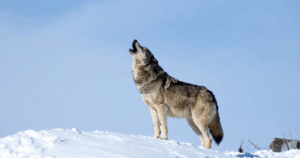
- When: Crepuscular windows (dawn/dusk) are best, but winter days are short, so you get longer prime hours.
- Where: Wide, windy valleys with good visibility, Hayden Valley, and (by car) Lamar Valley.
- How: Scan ridge lines and open benches. Look for bedded shapes in the lee of the wind. Ravens can tip you to a carcass.
- Behavior notes: Winter favors wolves’ endurance and teamwork. You may see travel lines in soft snow and assessment behavior near herds.
Science Snapshot
Yellowstone’s wolf research (e.g., annual Yellowstone Wolf Project reports) consistently documents winter as a peak period for observing hunting, territory defense, and pack cohesion. Snowpack and ungulate conditions influence encounter rates.
Bison
- When: All day; active feeders.
- Where: Thermal areas, river corridors, wind-scoured benches.
- How: Watch for steam halos in sub-zero temps. Bison use roads and packed paths; give them space and time to move.
- Behavior notes: You’ll often see “snow plowing” with massive heads pushing aside crust to reach grasses.
Science Snapshot
Bison reduces energy costs by using packed routes and thermally influenced ground. Studies and NPS natural history accounts document this winter strategy across the interior. Great Plains Research
Elk
- When: Early and late days.
- Where: Valley edges, timber margins, and geothermal benches that reduce snow depth.
- How: Glass edges of forest stands; look for alert ears and heat shimmer above the herd on cold mornings.
- Behavior notes: Expect tight groups, vigilant posture, and regular moves to conserve energy.
Red Fox & Coyote
- When: All day, with active hunting in open meadows.
- Where: Meadow margins and willow flats.
- How: Learn the “mousing arc.” A fox listens, triangulates, then leaps. If you see repeated head-cocking, be ready.
- Behavior notes: Coyotes may trail wolf paths at a distance or work carrion zones; foxes often prefer lighter, crusted snow where they can stay on top.
River Otter & Trumpeter Swans
- Where: Open water along rivers (Madison, Firehole, Gibbon).
- How: Look for breathing holes, otter slides, and swan family groups in calm backwaters.
- Behavior notes: Otters patrol their territories, while swans rest and feed in areas where the water remains open due to geothermal inputs.
Ethical Reminder
Stay off wildlife corridors. Your guide will position the snowcoach for viewing, ensuring that animals are not pushed into deeper snow or onto roads.
Reading Winter Landscapes Like a Naturalist
Wind
Wildlife often beds on the lee side of ridges and timber to avoid wind chill.
Snow Structure
Crust vs. powder changes the way movement occurs. Crust can help foxes and hinder heavy ungulates.
Thermal Influence
Frost-free patches near geyser basins and warm rivers create microhabitats that are easier for foraging and have open water.
Edge Habitats
Transitions between timber and meadow are particularly productive, especially in low-light conditions.
These field cues come directly from daily guide practice and align with long-running Yellowstone research on winter energetics and habitat selection (NPS resources, wolf and ungulate winter ecology literature).
What a Snowcoach Day Actually Feels Like
Early Start
We aim to be rolling before full sunrise. That gives you the best chance at Yellowstone wolf spotting in winter and clean, calm air before winds rise.
Short, Smart Stops
Windows up while moving; windows down at stops when it’s safe. Guides scan, then invite you to step out (briefly) for scope views or photos.
Warm-Up Cycles
We layer the day with observation blocks and warm-up breaks. Hot drinks matter. So does dry gear.
Adaptive Routing
Weather, wind, and wildlife reports from other guides inform the day’s plan. We chase conditions, not checklists.
What to Wear: Stay Warm Without Overthinking It
Base
Merino or synthetic long underwear (top/bottom), liner socks
Mid
Fleece or lightweight puffy, softshell pants if you run warm.
Shell
Waterproof, windproof jacket and insulated snow pants.
Extremities
Insulated boots, thick wool socks, a warm hat, a neck gaiter, and thin liner gloves under insulated mitts.
Extras
Hand/toe warmers, sunglasses or goggles for spindrift, sunscreen (yes, in winter).
Pro Tip
If your feet run cold, start with warm, dry socks in the vehicle. Swap midday if needed. Moisture is the enemy.
Camera and Optics: Simple, Reliable, Effective
Binoculars
8x or 10x with good eye relief.
Spotting Scope
We carry one; if you bring your own, use a solid, cold-tolerant tripod.
Batteries
Cold drains power fast. Keep spares in an inside pocket.
Settings
Lower your exposure compensation slightly to preserve detail in snow. Shoot RAW if you can.
Technique
Brace on the snowcoach frame at stops. For wolves or distant elk, prioritize stability over zoom.
Field Etiquette That Protects Wildlife (and Your View)
- Stay on the guide’s side of the line. If we say “watch from inside,” it’s to prevent pushing animals.
- Keep voices low; sound carries over the snow.
- Let bison decide right-of-way. If they take the road, we wait, no honking or edging forward.
- Pack out every scrap, including hand-warmer wrappers and snack microtrash.
Comparing Seasons: Why Winter Snowcoach Tours Are Different
- Fewer crowds, more patience, you can settle into a valley and let the day come to you.
- Clean storylines, tracks, and signs make behavior easier to interpret.
- Thermal drama, steam, rime ice, and low light define an aesthetic you don’t get in July.
- Educator-led learning in a smaller group and quiet landscape allows your guide to unpack ecology, history, and behavior on the spot.
Sample Itinerary: Jackson, WY to Yellowstone (Winter)
- Pre-dawn departure from Jackson, WY (check your confirmation for exact time).
- Transit to the south Entrance and into the park via oversnow.
- Morning focus on river corridors for swans/otters, then open valleys for wolves and bison.
- Midday thermal features and snowcoach-accessible geyser basins; warm-up break.
- Afternoon return through meadows with improving side light for photography.
- Evening arrived back in Jackson with thawing batteries and full memory cards.
Routes adjust according to weather, road conditions, and wildlife reports. That flexibility is the real value of guided snowcoach tours in winter.
Quick Packing Checklist
- Layers listed above
- Binoculars; optional spotting scope
- Lens cloths and battery spares
- Snacks you actually enjoy in the cold
- 1–2 insulated water bottles (warm drinks help)
- Small sit pad for snowy pullouts
- Personal meds and blister kit
A Quick Look at the Science Behind It All
- Energy budgets drive behavior in winter, animals reduce distances, select efficient routes, and avoid unnecessary movement (documented in NPS resources and peer-reviewed ungulate energetics literature).
- Predator–prey interactions are easier to detect when snow reveals tracks, chase lines, and carcass sites; wolf project telemetry and reports often note increased visibility in winter.
- Thermal influence matters warm ground, and open water reduces snow depth and ice cover, concentrating foraging and rest sites for bison, elk, swans, and otters.
If you want source starting points, look to:
- National Park Service Yellowstone winter ecology pages and trip-planning advisories
- Yellowstone Wolf Project annual reports (behavior and sighting patterns)
- Peer-reviewed work on winter energetics in ungulates and snow-mediated predator–prey dynamics
(We’re happy to walk you through these in person; nothing replaces seeing the concepts play out in real time.)
Ready to See Winter Right?
Yellowstone in winter rewards the prepared: early starts, good layers, quiet observation, and a guide team that reads the landscape. If you’re looking for the best Yellowstone snowcoach tours in winter, with educators who know when to move and when to wait, join us.
Book Your Winter Tour
Explore routes, dates, and availability with Wildlife Expeditions, the original educational tour provider in Yellowstone and Grand Teton since 1999. Start here: wildlifeexpeditions.org