
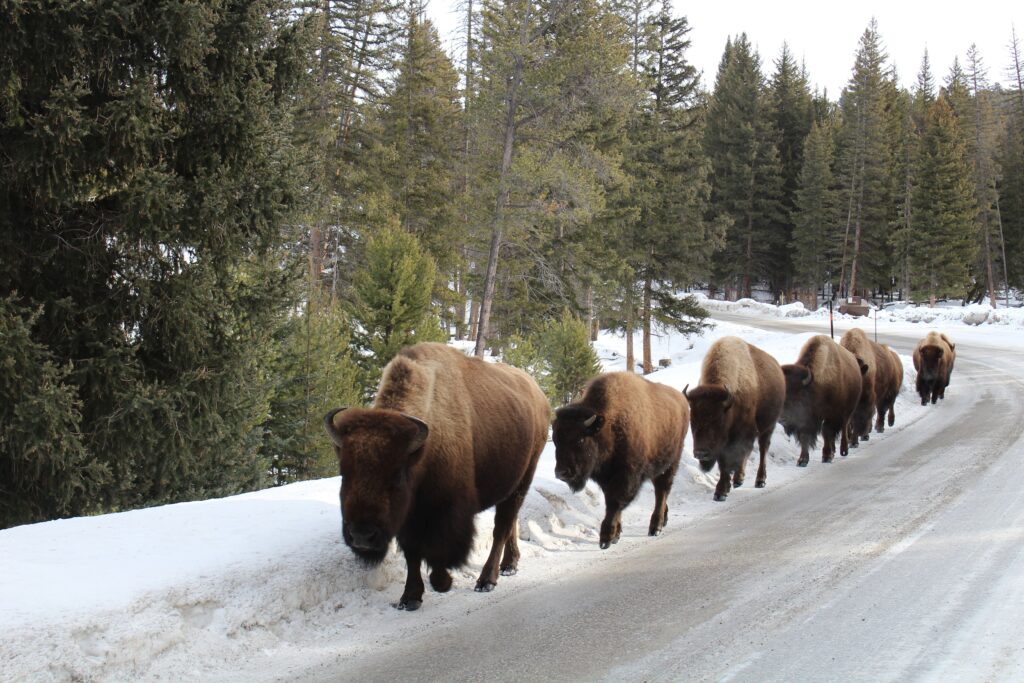
Yellowstone National Park in winter is an entirely different world, quiet, pristine, and dusted in snow. With most roads closed to regular vehicles, guided snowcoach tours provide an exclusive way to explore the park’s remote corners and experience wildlife behavior in its rawest form.
At Wildlife Expeditions, we’ve been guiding guests through Yellowstone winters for over 20 years. Our snowcoaches are designed to safely travel over snow-covered terrain, allowing guests to witness winter wildlife in Yellowstone, bison steaming in the cold, wolves padding across valleys, and elk gathered near thermal features, all with the comfort of a warm ride and the expertise of a trained naturalist.
In this guide, we’ll highlight the top scenic stops on Yellowstone snowcoach tours and share simple but effective photography tips to help you capture the magic.
1. Madison River Corridor
What You’ll See
One of the first stretches after entering through the West Yellowstone entrance, the Madison River offers open views of bison herds, trumpeter swans, and occasional sightings of river otters. The geothermal warmth keeps parts of the river unfrozen, attracting wildlife.
Photography Tip
Use a zoom lens to focus on bison breathing steam. Early mornings offer dramatic lighting. Overcast skies? Try black-and-white shots to emphasize texture and contrast in the snow.
2. Fountain Paint Pot Area (Lower Geyser Basin)
What You’ll See
A surreal mix of bubbling mud pots, fumaroles, and vibrant microbial mats, especially striking with snow all around. Boardwalks provide access to safe viewing areas and photo opportunities.
Photography Tip
Steam can cloud your lens, take multiple shots, and use a lens hood if possible. To preserve color in your images, manually lower exposure slightly so geyser hues don’t wash out in bright snow.
3. Midway Geyser Basin: Grand Prismatic Spring (Overlook View in Winter)
What You’ll See
While the boardwalk might be inaccessible due to snow, some snowcoach tours offer a distant vantage point of Grand Prismatic Spring. The thermal mist rising through the cold air creates an ethereal effect.
Photography Tip
Use a polarizing filter to cut through steam and glare. If viewing from a distance, switch to a wide-angle lens to incorporate snow-covered trees into the frame.
4. Old Faithful Geyser
What You’ll See
Even in winter, Old Faithful puts on a show approximately every 90 minutes. The geyser’s eruption against a snowy backdrop is unforgettable, and so is the surrounding geothermal basin.
Photography Tip
Position yourself where the eruption is backlit by the sun if conditions allow. For scale, include snow-laden trees or people in your frame, but be quick: the eruption lasts 1.5–5 minutes.
- Biscuit Basin and Black Sand Basin
What You’ll See
These lesser-known geyser basins offer vivid contrasts, emerald hot springs bordered by white snow, with relatively low winter foot traffic.
Photography Tip
Try shooting at lower angles to capture the reflection of steam and color on the snow. Early afternoon offers the best natural light here.
6. Hayden Valley (When Accessible)
What You’ll See
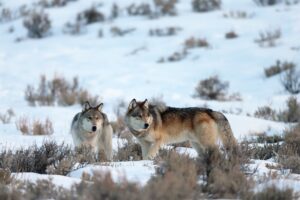
A prime location for Yellowstone wolf spotting in winter. The wide-open expanse makes it easier to spot wildlife moving through the snow, especially with the help of naturalist guides using spotting scopes.
Photography Tip
Bring binoculars and a telephoto lens (300mm or longer). Wolves and coyotes tend to be active during dawn or dusk. Stabilize your camera on the snowcoach window or bring a beanbag tripod.
7. Yellowstone Lake (West Thumb Area)
What You’ll See
Frozen and vast, Yellowstone Lake in winter is peaceful and dramatic. You may see ice fog drifting across the surface and bison crossing the shoreline near the thermal vents.
Photography Tip
Look for symmetry: reflections, icy textures, and sky blending into the lake create minimalist but powerful images. Use manual focus if your lens struggles in foggy conditions.
What Makes Yellowstone Winter Wildlife Spotting Special?
Unlike the crowded summer months, Yellowstone snowcoach tours in winter give you front-row access to the quieter side of the park. Without constant traffic, wildlife tends to stay closer to the road. Our expert guides are trained in wildlife behavior and ecology, pointing out signs like tracks, scat, and movement patterns that casual visitors might miss.
You might spot:
- Bison use their heads to sweep snow from the ground as they graze
- Elk are grouped in lower elevations
- Coyotes hunting voles under the snow
- Trumpeter swans gliding through open water
- Wolves interacting in their social hierarchy
Winter also allows you to witness thermoregulatory behaviors such as snow roosting, huddling, and basking near geothermal features. Our team shares real-time interpretation, so every sighting becomes a learning opportunity.
What to Pack for a Snowcoach Photography Tour
Yellowstone winters can dip below zero, and you’ll be hopping in and out of the snowcoach for short photography stops. Dress in layers, and pack gear with winter conditions in mind:
- Base layers (moisture-wicking)
- Insulated outerwear and snow boots
- Touchscreen gloves and hand warmers
- Camera with extra batteries (cold drains them fast)
- Lens cloths and a weather-sealed bag or dry sack
- Binoculars or spotting scope (if you have one)
Pro Tips from Our Guides for Better Winter Photos
- Shoot in RAW; this gives you more flexibility to adjust white balance and exposure later.
- Use Exposure Compensation (+0.3 to +1.0) to prevent snow from fooling your camera’s meter into underexposing.
- Look for contrast, dark animals against white snow, which pop best with clean backgrounds.
- Keep your camera warm, use inside pockets when not shooting, and avoid lens fog by letting gear acclimate gradually when going indoors.
- Ask your guide for suggestions; they know where the light is best and when certain animals are more active.
See Yellowstone Differently This Winter
Snowcoach tours open a whole new world in Yellowstone. The landscapes are quieter, the wildlife more active, and the light crisper. Whether you’re a seasoned photographer or just bringing your smartphone, these tours offer front-row access to winter wildlife in Yellowstone that most people never get to experience.
If you’re ready to see bison steaming in the cold, geysers erupting into frozen air, and wolves moving through snow-covered valleys, we’d love to guide you there.