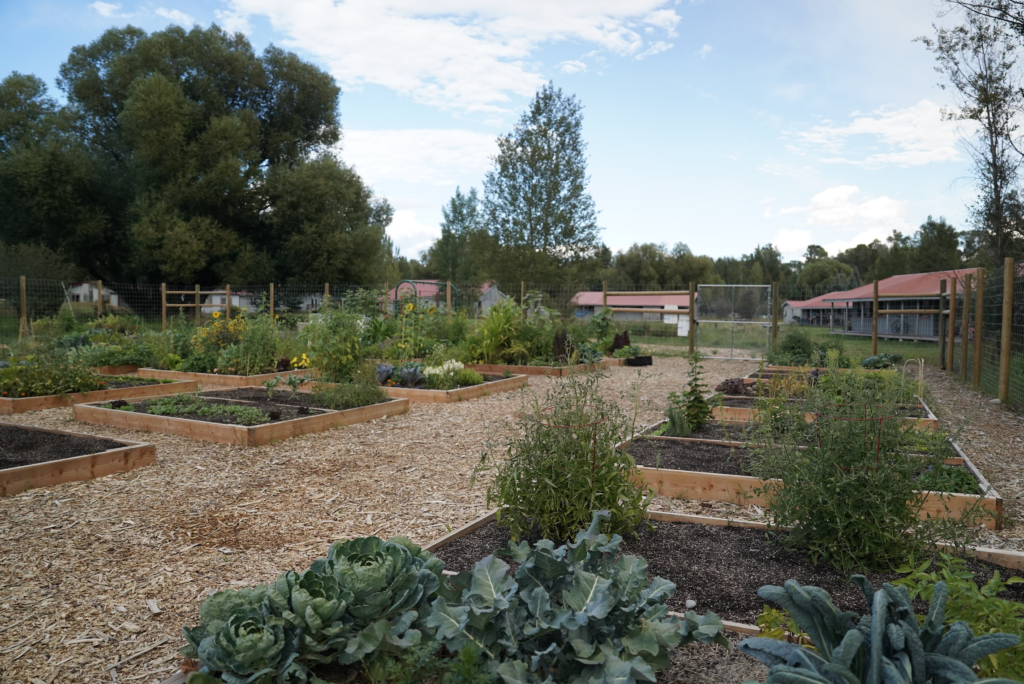
When Teton Science Schools announced the new Mad Dog Community Garden at our Wilson Campus, we celebrated what the project will bring to our community: more opportunities to grow food, connect with neighbors, and experience immersive place-based learning.
But beneath the garden beds is another story, one about protecting one of our valley’s most important resources: clean water.
Investing in the Health of the West Bank
As part of the community garden development, Teton Science Schools made a significant investment by connecting the Wilson Campus to the public sewer system.
“This project is about much more than creating a beautiful community garden,” said Wayne Turner, Executive Director of Teton Science Schools. “One of the most important investments we made was connecting our Wilson Campus to the public sewer system. While that work isn’t as visible as the gardens themselves, it reflects our commitment to protecting local water resources and responsibly stewarding the places where we live, learn, and teach. We believe stewardship begins with how we care for our own campus, and this investment demonstrates that commitment for generations to come.”
Projects that reduce impacts to groundwater and improve surface and subsurface water quality help strengthen the health of the Greater Yellowstone Ecosystem and contribute to the long-term resilience of the West Bank watershed.
This investment reflects a simple belief: caring for our place means caring for the systems that sustain it.
Supporting the Mission of Protect Our Water Jackson Hole
This work closely aligns with the mission of Protect Our Water Jackson Hole (POWJH), a community initiative dedicated to protecting and restoring clean water throughout Teton County.
POWJH recognizes that protecting clean water is one of the most urgent environmental priorities facing our community. Through collaboration with community members, partners, organizations, and elected officials, the initiative advocates for practical solutions that safeguard local waterways and the ecosystems that depend on them.
“Septic systems don’t work well in our valley–the cold temperatures, high water table, and low organic content of our soils all diminish their effectiveness,” says Phil Powers, POWJH’s executive director. “They are a source of pollution into the same groundwater from which we all drink. They contribute to excess nutrients in our streams, compromising the aquatic habitat our native fish rely on. Every wastewater system we connect to sewer is a win for the Upper Snake River watershed. We applaud TSS for this significant investment in water quality.
At Teton Science Schools, we often believe in letting our actions speak for themselves. Connecting the Wilson Campus to sewer infrastructure is one of those actions, an investment that reflects our commitment to responsible stewardship while supporting broader community efforts to improve water quality.
Partnerships That Make It Possible
The Mad Dog Community Garden exists because of the collaboration between organizations that share a vision for healthy communities and healthy landscapes.
We are grateful to Slow Food in the Tetons for their leadership in building community gardens rooted in the values of good, clean, and fair food for all. Their work has created meaningful opportunities for hundreds of local families and children to engage with gardening and local food systems.
We also appreciate the support of the Teton Conservation District, whose critical grant funding helped make the community garden possible while ensuring best practices were implemented throughout the project.
Together, these partnerships demonstrate what’s possible when organizations work toward a shared goal: creating places where people, food, education, and stewardship all flourish.