
Written by Kevin Taylor, Lead Wildlife Expeditions Guide
If you talk to any local Jackson Hole resident right now, it will not take long for the conversation to steer toward our record-breaking mild winter. It was remarkable how seldom my nordic skis came out of the shed this winter, we saw so many elk all winter outside of their traditional winter habitats due to the low snowpack and access to food, and my backyard daffodils (that I always hope flower by Mother’s Day so my daughter and I can give my wife fresh local flowers to celebrate her) flowered a month early. But no matter how strangely warm this past winter was, Spring is here, and it is extremely exciting.
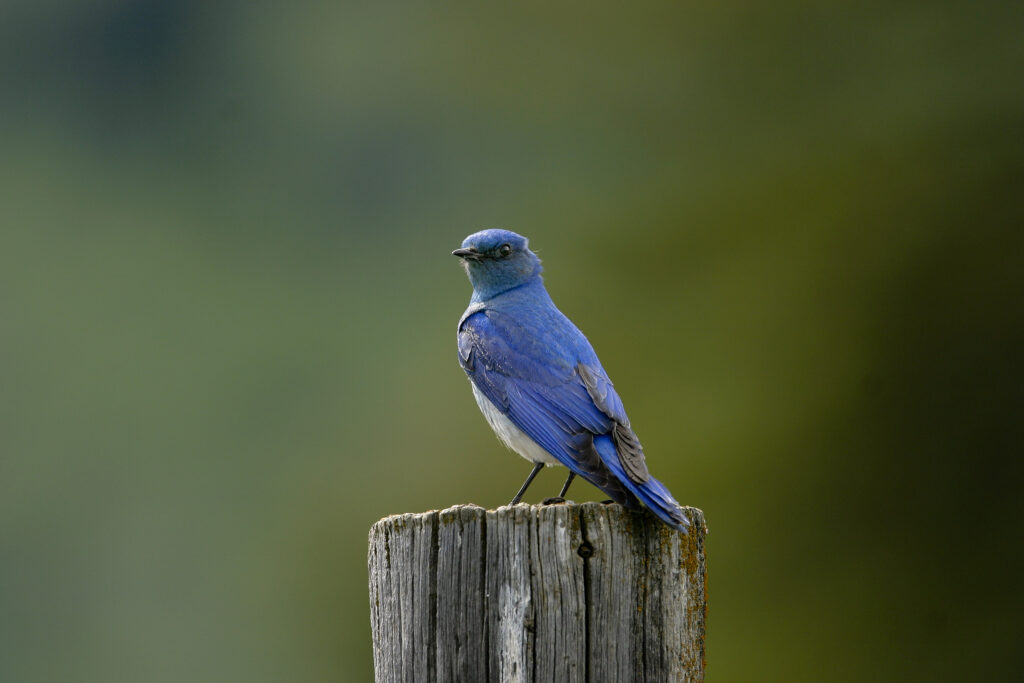
When visitors to the Greater Yellowstone Ecosystem ask me which is my favorite season, I often respond, “Fall.” However, every Spring I seriously reconsider. One of the very exciting things about spring is the return of the migrant birds. You see, of the approximately 300 bird species that can be seen or heard in summer in Grand Teton and Yellowstone National Parks and the surrounding area, only about 60 of them can be regularly found here in the winter. The other 80% have to go south due to our long, cold winters and deep snow. Going ‘south’ can range from Colorado to South America. Although the timing of so many signs of spring has been early this year, the arrival of migrant birds seems to be right on the normal schedule. A Mountain Bluebird that summers in Jackson Hole, but winters in Central Mexico, has no idea what our weather is doing here, so they stick to their thousands of years old cues to determine when it’s time to head back north for the summer. Birds use day length and sun angle as their calendar, and, no doubt, stars figure into the decision-making equation as well.
Mountain bluebirds arrived in Jackson Hole the first week of March as usual. In a normal weather year, early March is still very much winter. But it must be worth it for them to brave the winter in order to be in the front of the line to secure a nest cavity to lay their eggs and in which to raise their young. Although there are many birds that nest in cavities, few species actually have the ability to make holes in trees. Birds such as bluebirds, red-breasted nuthatches, mountain chickadees, and tree swallows rely on old abandoned holes made and often first used by woodpeckers and sapsuckers.
I saw my first osprey of the year in the first couple of days of April, which has been a reminder of my daughter’s birthday for the past twenty years. I heard the pterodactyl-like vocalizations of sandhill cranes flying high in the clouds over Grand Teton National Park at the end of March, right on schedule. I lay down on the ground on my back and watched the 100 or so cranes flying in V-shaped formations. “Welcome back, my friends,” I said softly with a smile, the kind of smile that feels like all is well within me. Life is good when I walk out my front door in the morning before light, and the first thing I hear is the male American robins enthusiastically singing, “cheerily, cheer up, cheerily, cheer up”, and then the same robins are the last to sing right at the last of the day’s light. There are not many places like the Greater Yellowstone Ecosystem with grizzly bears, wolves, and all the other animal species that were here prior to settlement. However, there are birds everywhere. Get out and enjoy and celebrate the welcoming of the change of season. Happy Spring, my favorite season!!